Our online donation services are currently down but you can still make a donation via JustGiving or by phone on 0303 303 3030 Donate now

Skip to content
CAFOD
Strengthening economic initiatives led by women in El Salvador

CAFOD’s partners are supporting small rural businesses such as sewing businesses to flourish, providing a reliable source of income

Our impact in 2024

  • In 2024 we reached 3,176 people in El Salvador.

  • CAFOD’s partners have supported 100 small rural businesses such as community shops, chicken farms, traditional food shops and sewing businesses to flourish, providing a reliable source of income.

  • CAFOD’s partners advocated for stronger water protection laws and helped secure legal protection for the Cerro Negro watershed, benefiting 12 communities and curbing deforestation.

  • 265 families across nine communities in Chiltiupán, Panchimalco, Zacatecoluca and San Juan Nonualco received humanitarian assistance after heavy rains devastated vulnerable communities.

  • CAFOD partners provided legal and humanitarian support to 267 migrants in response to the migrant crisis.

Why CAFOD works in El Salvador

El Salvador remains a very unequal country. More than a quarter of Salvadorians live in poverty, with poverty rates being disproportionately higher among indigenous and rural communities.

Women in El Salvador are very vulnerable to violence, both domestically and as part of gang-related violence. El Salvador is one of the most dangerous places in the world for women. The government’s current state of emergency means that women and girls are increasingly at risk, as it has become very difficult to seek justice for violence and human rights abuses.

Women often have very few options for earning a living, especially in rural areas. With few economic opportunities and limited financial literacy, women are often unable to make their own decisions or have control over their own lives, reinforcing a cycle of dependence and poverty.

Rural communities in El Salvador, and those who rely on agriculture to earn a living, are vulnerable to the impact of climate shocks. Increasingly extreme weather, such as droughts, floods and tropical storms, are impacting crop yields and increasing prices. This is pushing vulnerable families further into poverty. Climate vulnerability, violence and limited job opportunities mean that many people are forced to migrate.

Water pollution, scarcity and contamination remain huge challenges in El Salvador. There is an almost total absence of wastewater management across the country – a crisis made worse due to deforestation which has disrupted the water cycle and quality of the water. Extractive industries, such as large-scale metallic mining, are also responsible for further pollution of water sources.

How we’re responding

Alongside local partners, we’re supporting women, especially rural and young women, to learn more about their rights and the importance of financial autonomy. Women are learning more about gender equality, how to speak out and access protection services against gender-based violence, and the importance of recognising the value of women in the workplace.

Our partners are working alongside female farmers to learn more about adapting to the climate crisis, as well as how to improve agricultural yields and diversify their food production. Women are learning environmentally friendly farming methods which conserve soil and the value of native seeds. By increasing and diversifying produce, female farmers are improving their diets and incomes, leading to greater financial independence and decision-making abilities.

We’re working with local partners to support vulnerable communities in El Salvador, especially women and young people, to protect their environmental and human rights. Our partners are working alongside human rights defenders and victims of human rights violations. Together, we’re providing psychological and legal support to communities seeking justice.

Our partners are also speaking out on environmental issues in El Salvador, especially around water and mining. We’re working closely with local communities to better understand their rights and how to protect their land, territory and natural resources. Now, communities are speaking out against the negative environmental and social impacts of extractive industries such as metallic mining.

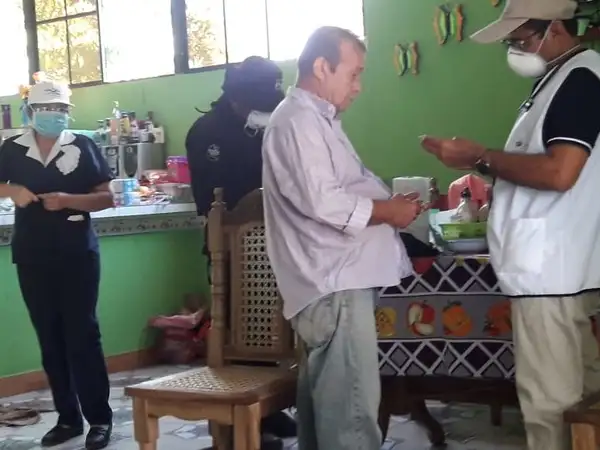
We’re working alongside partners to support local communities that are vulnerable to the impacts of the climate crisis (such as droughts, floods and hurricanes), by providing emergency assistance like cash transfers, food, hygiene supplies, medicine and farming inputs to help families get back to work.

In addition to emergency assistance, our partners are helping local communities to better prepare for disasters and become more resilient.

Our partners are also supporting displaced people in El Salvador and Central America by providing immediate humanitarian assistance to support their basic needs, with psychosocial and legal guidance.

Lent family calendar March 25.jpg

What we do

CAFOD is the official aid agency for the Catholic Church in England and Wales.

With your help, we reach out to people living in hard-to-reach places, in war zones and those who are discriminated against.